
Top 5 Integrated Security Measures for Modern Data Centers

With the increasing demands of Industries for IT infrastructure due to vast volumes of data, the security of these data centers has also become more important than ever. Modern data centers are not just large storage facilities; they are highly complex environments offering a range of data center services, including real-time data management, cloud integration, and disaster recovery. Particularly in growing hubs like in India – Bangalore, Mumbai, and Mohali – considering the recent cyber attacks, the demand for reliable data center services has skyrocketed. According to Gartner, global cybersecurity spending is expected to reach $260 billion by 2027. In this blog, we’ll explore the top 5 integrated security measures essential for securing today’s data centers, especially those managed by top data center service providers.

Physical Security Control

Data center and digital security are synonymous, physical security forms are the first line of defence. Data center facilities must be equipped with multi-layered physical security measures such as biometric access, surveillance cameras, and perimeter fencing.

Firewall and Intrusion Detection Systems (IDS)

Firewalls prevent unauthorized access while monitoring incoming and outgoing traffic. implementing a robust firewall system is one of the most essential tools for securing a data center

Data center services must also incorporate Intrusion Detection Systems (IDS) to flag suspicious activities. In addition to monitoring traffic, IDS provides real-time notifications to IT managers about potential breaches. Leading data center service providers focus heavily on these technologies to prevent attacks before they compromise the system.

Encryption and Data Masking

Modern encryption protocols are now seamlessly integrated with various data center services to safeguard sensitive information. Data center management companies in India also offer data masking techniques to anonymize datasets, which is particularly useful for businesses handling sensitive personal data. This not only ensures compliance with data privacy regulations but also strengthens data security layers against breaches.

Emerging Technology: As encryption technology advances, quantum encryption is being explored as the next step in securing data. While still in its nascent stage quantum encryption promises unbreakable encryption by utilizing the principles of quantum mechanics, ensuring that any interception of data would immediately be detected. Forward-thinking data center service providers are beginning to investigate its potential integration into their infrastructure to future-proof data security.

Multi-Factor Authentication (MFA)

Password protection alone is not just enough in today’s complex cyber threat environment.  Leading data center service providers now go for Multi-Factor Authentication (MFA) to protect against unauthorized system access. MFA integrates multiple forms of identification such as passwords, OTPs, and biometric scans, providing an extra layer of protection.

Many data center services in India incorporate MFA as a standard offering to provide enhanced security for enterprises operating in high-risk industries like finance and healthcare.
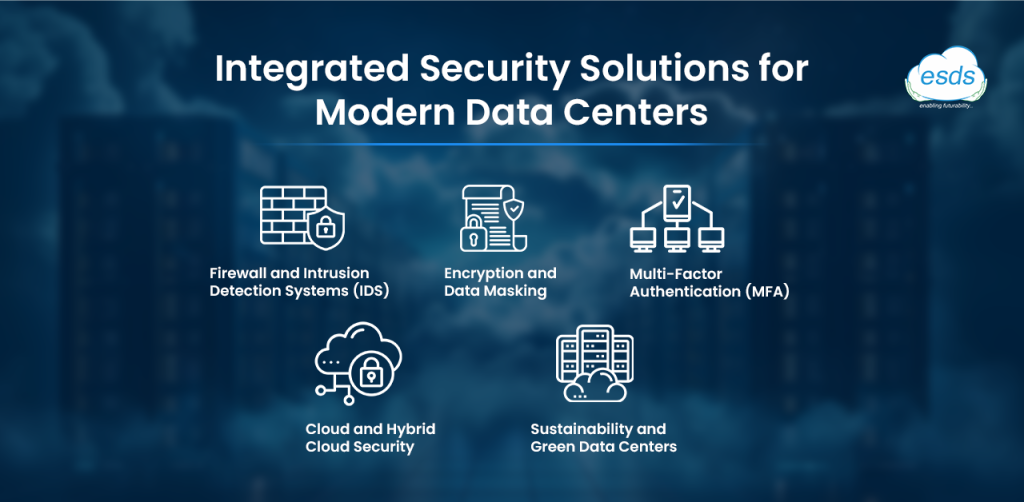
Cloud and Hybrid Cloud Security

Given the rapid growth of cloud adoption, many businesses are moving toward hybrid models that combine on-premises and cloud-based infrastructure. This shift introduces new security challenges, especially in data flow between environments. Data center service providers now offer specialized cloud and hybrid cloud security measures, ensuring data integrity and security across platforms. Cloud-native security tools like container security and continuous monitoring solutions help mitigate these risks.

Sustainability and Green Data Centers

Sustainability is no longer a buzzword; it is a critical focus for many businesses. To meet this demand, data centers in India, particularly in Bangalore and Mumbai, are investing in energy-efficient cooling systems, renewable energy sources, and green building certifications to reduce their carbon footprint. Companies choosing eco-friendly data center services benefit from both operational cost savings and enhanced brand reputation. The use of modular designs and renewable energy helps lower operational costs and make data centers more sustainable in the long run.

 DDoS Protection

Distributed Denial of Service (DDoS) attacks remain one of the most common threats to modern data centers. Top data centers in India now offer integrated DDoS protection as part of their security services, using advanced filtering and traffic analysis to prevent large-scale attacks from disrupting services. With the rise in cyber threats, DDoS mitigation strategies are essential to ensure continuous data flow and operational uptime.

Why Choose ESDS Data Center Services?

As one of the top data center providers in India, ESDS Data Center Services is dedicated to offering state-of-the-art integrated security measures. With data centers in Bangalore, Mumbai, and Mohali, ESDS focuses on delivering comprehensive solutions, including physical security, encryption, and AI-driven predictive security tools. Whether you’re looking to enhance your security framework or deploy a fully managed cloud infrastructure, ESDS provides unparalleled expertise and reliability to keep your data safe, compliant, and future-proof.

Secure your business data today with ESDS Data Center Services—India’s leading data center management company.

Cloud Computing: Understanding the Environmental Impact

Understanding the cloud computing environmental impact

In today’s digital age, the demand for compute power is soaring, leading to a significant environmental impact. Cloud computing, despite its ethereal-sounding name, has tangible consequences on sustainability. As society’s reliance on cloud services grows, it becomes crucial for businesses and IT leaders to take action to mitigate the environmental effects.

The Growing Environmental Concerns

The digital sector’s share of global emissions currently stands at around 3% to 4% annually. However, this figure is projected to double by 2025, according to The Shift Project, a French nonprofit advocating for a post-carbon economy. Data centers, the backbone of cloud computing, play a substantial role in these emissions.

According to the International Energy Association, data centers and data transmission networks contribute to nearly 1% of energy-related global greenhouse gas emissions each year. In 2020 alone, these emissions accounted for approximately 300 metric tons of carbon dioxide equivalent. As environmental, social, and governance issues gain prominence among consumers, investors, corporate leaders, and regulators, pressure mounts on cloud providers to adopt sustainable practices.

“Cloud providers care about sustainability because their key stakeholders care,” says Ed Anderson, a distinguished vice president analyst with research firm Gartner. However, the question remains: Can cloud providers truly reduce their environmental impact in a significant way?

Understanding Cloud Computing

Before delving into the environmental impact, let’s define cloud computing. It refers to on-demand compute resources, such as processing and storage, accessed via the internet. The term gained popularity in the mid-2000s when Amazon launched Amazon Web Services (AWS) and its Elastic Compute Cloud service. Other major players soon joined the market.

As cloud providers expanded their capabilities, software makers began shifting from selling on-premises software to offering Software as a Service (SaaS) on the cloud. This transition prompted many organizations to move their compute operations to the cloud, gradually shutting down their own data centers.

The Environmental Impact of Cloud Computing

Contrary to its ethereal connotations, cloud computing relies on tangible resources like rare metals, hardware, cables, servers, and storage arrays. This reliance on physical infrastructure has made the environmental impact of cloud computing more visible.

Cloud computing consumes massive amounts of energy, and energy production itself has an environmental footprint. Data centers and cloud facilities contribute to approximately 1.8% of U.S. electricity consumption and a significant portion of tech companies’ emissions, as reported by the World Economic Forum.

Moreover, cloud computing facilities require extensive water usage for cooling purposes. For example, ESDS’s data centers consumed an average of 420,00 gallons of water per day in 2021. Artificial Intelligence (AI) services can further drive up water consumption, with just 20 to 50 queries requiring 17 ounces of fresh water, as calculated by the University of California, Riverside.

The heat generated by cloud computing operations is another concern. While some operators explore options to recycle the heat for other purposes, such practices are not yet widespread. Additionally, cloud providers often require large tracts of land for their facilities, which can have unintended environmental consequences.

On-Premises vs. Cloud: Environmental Effects

While cloud computing has its environmental impact, comparing it with on-premises computing reveals a more nuanced picture. Industry experts generally agree that companies should transition to the cloud due to its potential for increased efficiency and aggregated resources.

Research firm IDC estimates that moving from on-premises computing to the cloud could prevent over 1 billion metric tons of carbon dioxide emissions between 2021 and 2024. Cloud providers can optimize operations in ways that most on-premises data centers cannot, resulting in more environmentally friendly workloads.

The scale and business model of cloud providers enable them to build optimized operations. They can design facilities for maximum efficiency, power off unused computing resources, and commit to renewable energy goals. For instance, AWS plans to become water positive by 2030, achieve 100% renewable energy across its operations by 2025, and reach net-zero carbon by 2040. Similar sustainability objectives exist for Google, Microsoft, IBM, and Oracle.

While these efforts are commendable, skeptics question the true impact of cloud customers on reducing the environmental footprint of cloud computing. MIT’s research, released in February 2022, highlights the significant effects of cloud computing. Moreover, there is increasing scrutiny on whether companies, including cloud providers, are genuinely meeting their sustainability claims.

As organizations prioritize sustainable procurement and vendor choices, scrutinizing green claims becomes crucial. It is essential to assess the actual environmental impact of cloud providers and hold them accountable for their sustainability efforts.

Conclusion

Cloud computing’s environmental impact is a real and pressing concern. As the demand for cloud services continues to rise, it becomes imperative for cloud providers to adopt sustainable practices and minimize their carbon footprint. While the transition to the cloud offers potential efficiency gains, it is essential to remain vigilant and ensure that sustainability claims align with actual environmental outcomes.

By making informed decisions and promoting sustainable practices, businesses and IT leaders can contribute to a more environmentally conscious future in the realm of cloud computing.

How does a Data Center work?

What is a Data Center?

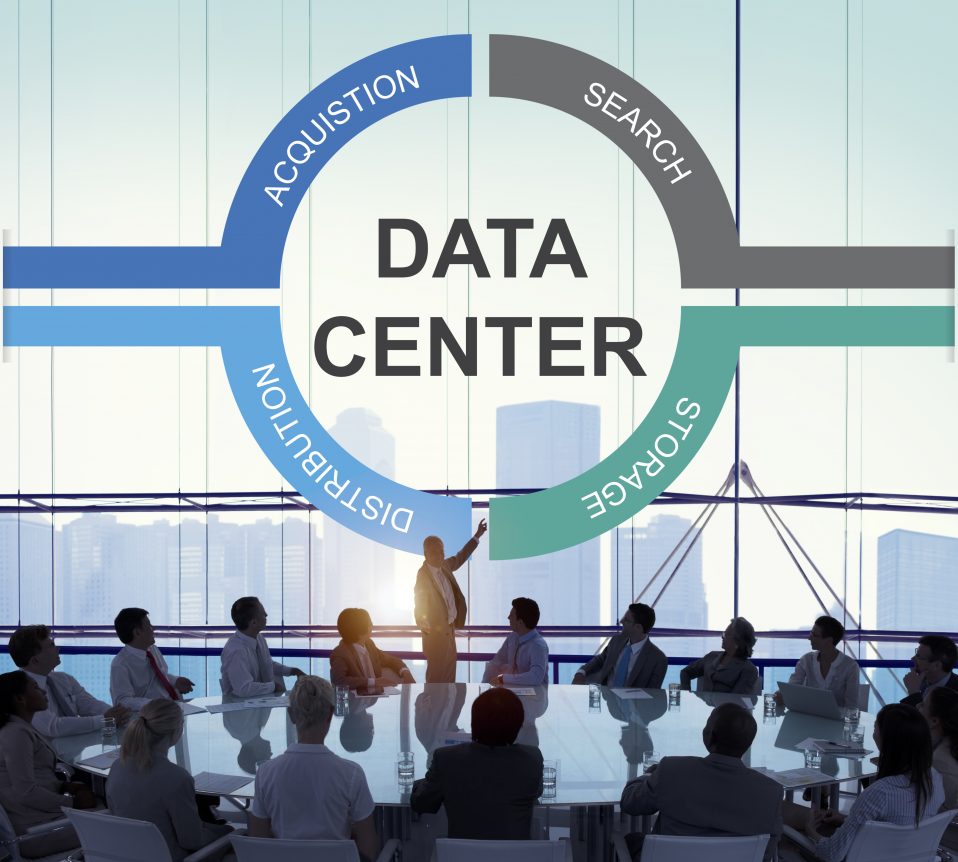
A certain premise where an entire organization’s IT operations and equipment is centralized and, where it stores, analyzes, and distributes large amounts of data is known as a Data Center (DC). Earlier, the data processing needs were not too high but nowadays those needs have grown exponentially. Data centers are now essential for daily operations and are important for business continuity.

They are reliable to store enormous amounts because of their avant-garde security levels that keep the organization’s data safe at all times. The DC site, which is also known as a Server Farm, is connected to a communication network so that information can be accessed easily and remotely. There are thousands of very small powerful servers running in a data center which can be harbored in a room, a floor, or an entire building.

Important components of a Data Center

Power

Power is unarguably the most important factor in a data center. Within the data center, the Colocation equipment and web hosting servers run on a dedicated power source. Every data center needs power backups to make sure their servers are always up and overall service uptime is received.

Cooling

Cooling is just as important as a power in a data center. The colocation equipment and web hosting servers need proper cooling so that they don’t heat up and continue to function smoothly. A data center should be designed in such a way where there is proper ventilation and the systems are kept cool at all times.

Network Operations Center

Network Operation Center (NOC) is a room for staff or dedicated personnel appointed to monitor, administrate, and maintain the computing resources in a data center. A NOC is able to provide all the information on the data center and gives updates on each and every activity. The person responsible in a NOC is able to see visualizations of the network which are being monitored and can be managed.

Safety Measures

You need to have security protocols in place in order to have a secure data center. You need to first figure out the vulnerabilities in your DC premises. Multi-factor ID authentication, surveillance throughout the facility, metal detectors, and biometric systems are some of the steps which can be taken to have top-level security.

Physical Security

Organizations do employ security guards to protect their data centers 24/7. These guards protect the inside and outside of the data center for enhanced security. Mantraps are generally used for access control. On-site security guards are an essential part of a data center. Some organizations allow these professional guards to carry firearms for higher security.

Redundancy & Reliability

High availability in a data center refers to the components which are continuously working. Systems are maintained from time to time to ensure smooth operations in the future. You can create a failover where you create a server and switch responsibilities to a remote server to have higher levels of redundancy.

Redundant Systems eliminate the threat of a single point of failure in the IT infrastructure. Backup Systems include an uninterruptible power supply (UPS) and generators. A generator can be programmed to start automatically during power outages. As long as the generators are fueled up, they will continue to run in an outage. UPS systems should also have redundancy built in them so that a failing module won’t affect the entire capacity of the system.

Maintenance of a Data Center

Regular maintenance of the data center ensures optimum reliability by taking precautionary steps to reduce downtime and avoidable failures. Let’s take a look at these 3 steps which will help you maintain your data center in the most effective way:

Safety First

There are numerous problems in a data center that can affect the life and health of the technicians working in it. Technicians should make sure their safety and health are not compromised while working on maintenance tasks and they should be trained before working in such scenarios.

Power Maintenance

Performing maintenance at regular intervals on UPS and batteries reduces the chances of failure whenever there is a power outage. Preventive maintenance will decrease the chances of failures and reduce the amount of energy consumed.

Get a Computerized Maintenance Management Systems (CMMS)

CMMS is the best way to track, measure, and improve your maintenance schedule. This software lets the facility manager track the status of maintenance work for their assets and costs associated with the work in the system. This software will help drive down the cost of maintenance and will increase productivity from within.

Conclusion

This blog covers only the basic information which will give you a rough idea about what exactly is a data center and what are the important components in it. To build an efficient data center it is essential to realize your requirements which will support your needs in the future.

Source: Insight success

Future of Data Center, Is Bright!

In the current IT scenario, the world has been experiencing an immense change that is bringing new technologies together for a better tomorrow. The past several years have only taught us to approach complex IT needs by making use of technologies that cater to these problems. Nowadays we have a huge dependency on the internet to do any kind of activity which connects us to whoever we want from any location at any point in time.

We do not realize that our life revolves around data centers because they distribute and store our data. Banks, enterprises, hospitals, telecommunications, and transportation are some of the areas which make use of data centers to store their critical data. These data centers are responsible for storing and distributing the humongous amounts of data that are being created every day.

Future of Data Center, Is Bright!
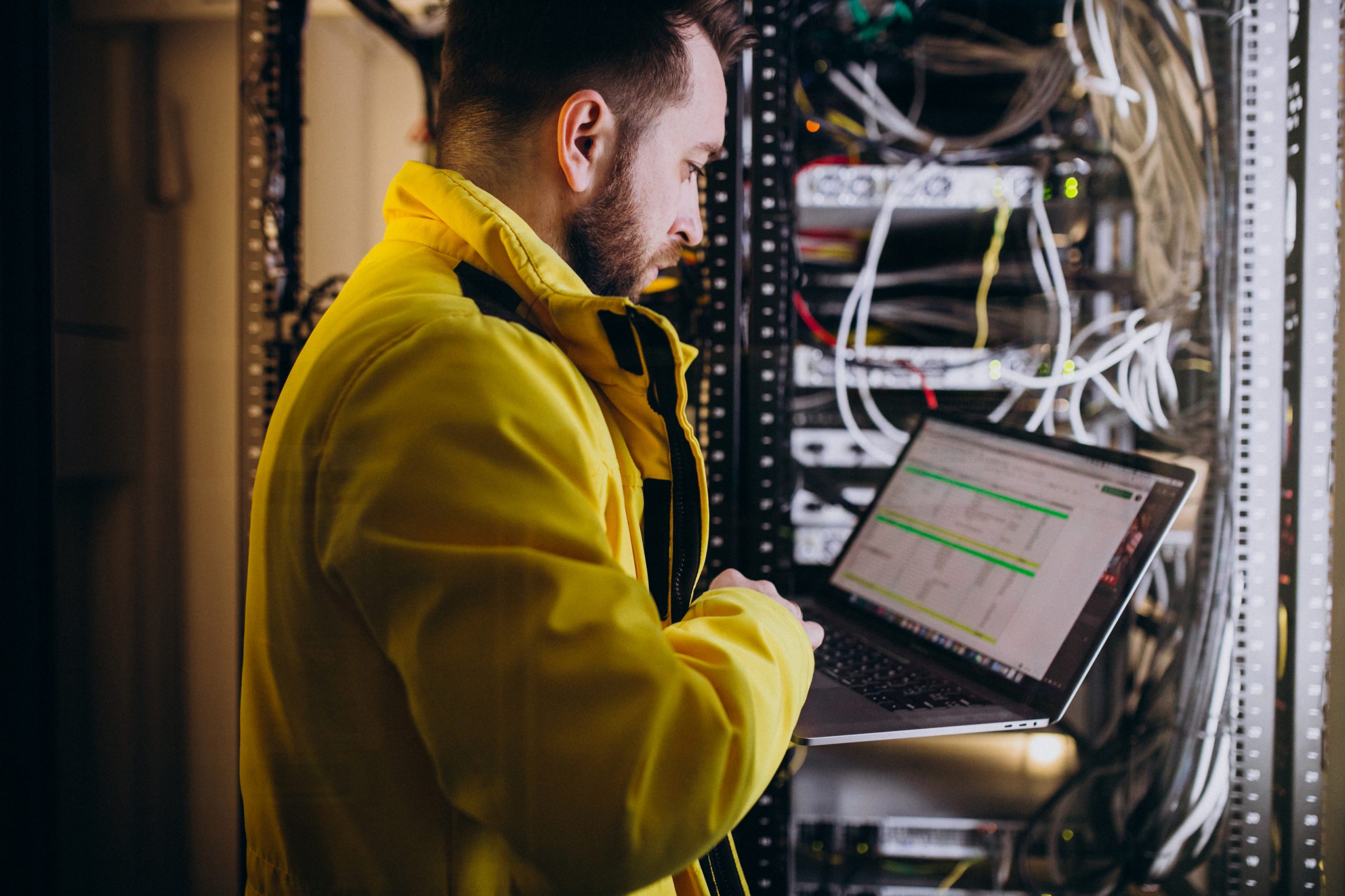
Young man engineer making program analyses

Services that are provided by a data center are changing according to the needs of users and they are evolving to fit the needs of the industry since the last decade. Datacenter services can be the components of a data center which can be used for processing, distributing, and storing data in various ways with speed and security. These services also include new hardware components and softwares which can be implemented for specific tasks. Data centers are built by keeping in my mind things like managers and owners, internal and external circumstances, storage needs, security, and much more.

In the future, there are a lot of changes which we will be able to see in data center facilities and the services they provide. Below are some of the listed services and components which are the future of data center services.

1. Fog Computing

Fog computing also is known as Fogging or Fog Networking extends cloud computing to the edge of an enterprise’s network. Electrical signals from the Internet of Things are wired to an automation controller which executes a control system program to automate the Internet of Things. There is a fine line between Fog Computing and Edge Computing and many times people get confused over what the real difference is. Fog computing has multiple layers of complexity for data conversion and its architecture is dependent on a communication chain to transfer data from physical assets to virtual entities. In this architecture, each communication link is a potential point of failure.

2. Edge Computing

In Edge Computing, the analysis of data is done where the data is created which is at the edge of the network. Here the analysis is carried out instead of sending it across data centers because it is a time-consuming process. At the edge of a network, micro data centers to process and store data so that it can be later transferred to the cloud. Edge computing lets you analyze data in real-time which improves decision making.

3. Software Defined Networking (SDN)

Software-Defined Networking is quickly becoming a key component for automation in data centers. Software-defined networking provides the best ways to manage virtualization which saves cost and offers speedy service delivery. It gives data center personnel the ability to manage each and every aspect of a data center which results in higher agility to manage and upgrade their hardware. It is too difficult to manage modern data centers by assigned personnel and thus, it is important to use an automation tool. It helps enterprises to improve their security by minimizing vulnerabilities caused by human errors.

4. Environmental-Friendly Data Centers

Green data centers aim for an eco-friendly environment. According to several studies, half of the resources in DC are used to run the infrastructure, like power, cooling, and UPS. The remaining resources are used to process the data. Data centers have started to work towards low energy consumption by reducing energy footprint. With newer cooling techniques, better efficiency, and upgraded power usage effectiveness (PUE), carbon emission is reduced which minimizes the damage to the environment. A new term emerging is Water Usage Efficiency (WUE) which focuses on the water to cool the entire data center. Some other newer technologies in the market are economizers and evaporative cooling which uses outdoor air.

Conclusion

There are many more technologies that are being developed in this field so that there is less work to be done and more results to be achieved.