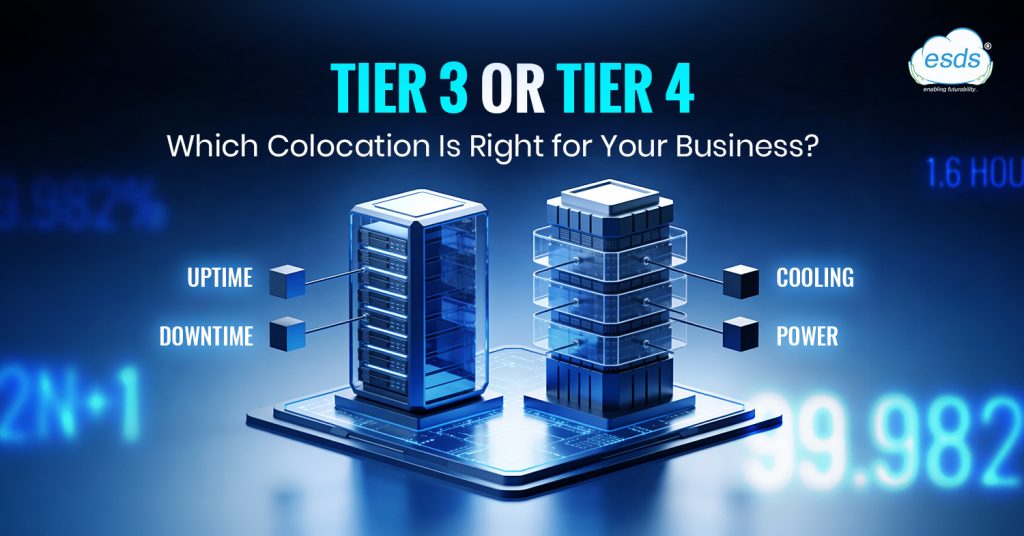

Tier 3 or Tier 4: Which Colocation Is Right for Your Business?

In India’s fast-growing digital economy, speed, reliability, and uptime are not just nice-to-haves; they’re business-critical. Whether you run an e-commerce platform, a SaaS firm, a financial services company, or a high-traffic web portal — the data center you choose can make or break your user experience and reputation. Two of the most talked-about options are Tier 3 and Tier 4 colocation or data-center facilities.

In this blog post, we’ll compare them in the context of the Indian market (especially cities like Mumbai or Delhi), and highlight why a service like the one from ESDS provide just the right balance between reliability and cost for many businesses.

Understanding Data Center Tiers: What They Mean

The concept of “data center tiers” comes from Uptime Institute — a globally recognized body that evaluates data-center infrastructure. The tiers (from 1 to 4) reflect increasing levels of redundancy, fault tolerance, and uptime guarantees.

Here’s an overview:

  • Tier 1: Basic facility — single path for power/cooling, no redundancy. Uptime 99.671%.
  • Tier 2: Some redundancy (partial N+1), but still limited. Uptime 99.741%.
  • Tier 3: Fully redundant paths for power and cooling, N+1 redundancy for components, and capability for concurrent maintenance. Uptime 99.982%. Downtime limited to 1.6 hours per year.
  • Tier 4: Fault-tolerant facility with 2N or 2N+1 redundancy (i.e. every critical component is duplicated), physically isolated systems, fully independent distribution paths — meaning even during maintenance or component failure, services run uninterrupted. Uptime 99.995%, downtime under 26 minutes per year.

Because each tier builds upon the previous, a Tier 4 data center inherently meets all the requirements of Tier 3 — and then some.

Nevertheless, a higher tier doesn’t always automatically translate to “better fit” — it depends on your actual business needs and risk profile.

Who Should Use Tier 3 and Who Needs Tier 4?

When Tier 3 is important

Tier 3 is often the sweet spot for many businesses — especially in India — because it offers significant reliability without the huge cost overhead of a Tier 4 facility. Typical use cases:

  • Companies handling non-mission critical workloads, internal applications, standard hosting, backups, dev/staging environments.
  • SMEs / mid-size firms that need high availability, but don’t have 24×7-global-traffic or extremely stringent uptime requirements.
  • Businesses looking for colocation with good redundancy for growth, but want to avoid overpaying for infrastructure they don’t fully need.

With an expected downtime of just 1.6 hours per year, a Tier 3 data center offers “good enough” reliability for a large number of business applications, while keeping costs relatively reasonable.

When Tier 4 becomes essential

Tier 4 makes sense when downtime is absolutely unacceptable, or when your infrastructure has to support heavy, continuous traffic, strict SLAs, or mission-critical workloads. Examples:

  • Financial services, banking, fintech — where every minute of downtime can cost money, compliance, or reputation.
  • Large-scale e-commerce / online marketplaces with high traffic volumes and peak loads.
  • Real-time services or SaaS platforms used globally, including 24×7 operations.
  • Enterprises with compliance / regulatory requirements and risk-averse clients who demand “always on” availability.

With downtime reduced to less than 26 minutes a year — even during maintenance — Tier 4 data centers provide the highest-level fault tolerance and availability.

Tier 3 /Tier 4 Colocation Facilities: What Works for Indian Businesses

While global standards define what “Tier 3” or “Tier 4” means, on-the-ground reality and pricing differ widely, especially in India.

  • In major metros such as Mumbai or Delhi — where latency, data-proximity, regulatory compliance, and connectivity matter — picking the right tier becomes more strategic than just technical.
  • Many Indian businesses don’t actually need the “absolute uptime bullet-proofing” that Tier 4 offers — but they still want stability, security, and professional-grade infrastructure.
  • Colocation providers in India, including those offering Tier 3 facilities, now come with robust redundancy, modern cooling, backup power, and managed services — making them a solid fit for many firms.

This is where a colocation provider like ESDS becomes relevant.

ESDS: The Right Partner for Your Business Need

ESDS offers colocation services through its network of Tier III-certified data centers located across India — Nashik, Navi Mumbai, Bengaluru, and Mohali.

Here’s why many businesses, especially in Mumbai, Delhi NCR, or other metro clusters, consider ESDS:

  • Purpose-built Tier III data centers — designed for redundancy (power, cooling), high-availability infrastructure, and professional-grade security.
  • Managed colocation & flexibility — ESDS provides not only rack space, power, and cooling, but also managed services like backup, monitoring, network management — freeing businesses from the hassle of maintaining physical infrastructure.
  • Scalable & geographically distributed footprint — with multiple data centers across India, ESDS enables enterprises to co-locate servers near their user bases (e.g. Mumbai or Delhi), improving latency and compliance.
  • Cost-conscious reliability — For many growing businesses, ESDS’s Tier III colocation offers a reliable, enterprise-grade infrastructure without the premium of a full Tier 4 facility — making it a pragmatic, business-friendly choice.

Tier 3 vs Tier 4 : A Comparison for Indian Businesses

FactorTier 3Tier 4
Uptime guarantee99.982%99.995%
Redundancy / Fault ToleranceN+1 redundant power/cooling paths; can perform maintenance without downtime.2N or 2N+1 full redundancy; dual independent systems ensuring fault tolerance even during failures.
Typical Use CasesLarge SMEs, high-traffic sites with moderate tolerance for maintenance downtime, internal hosting, backup, colocation.Critical services — finance, large-scale SaaS, e-commerce, high-availability global platforms.
CostLower compared to Tier 4 — good cost-to-performance ratio.Higher — because of more redundancy, infrastructure, maintenance complexity.

How to Decide: Which Tier Is Right for Your Business?

Here are the questions you should ask when choosing between Tier 3 and Tier 4:-

  1. How critical is uptime for your business?
    • If even a few hours of downtime per year could mean huge revenue loss, compliance failure or reputational damage — Tier 4 merits consideration.
    • If your business can tolerate occasional maintenance windows or minimal downtime — Tier 3 often offers the best balance.
  2. What’s your budget vs. value proposition?
    • Tier 4 involves higher capital expenditure (or recurring costs, in colocation). If your ROI from that extra uptime doesn’t justify the cost — Tier 3 makes financial sense.
    • For budget-conscious firms wanting enterprise-grade reliability, colocation with a provider like ESDS gives you infrastructure you probably wouldn’t want to invest in building from scratch.
  3. What’s the nature of your workloads?
    • Are you running mission-critical applications, financial transactions, real-time services, e-commerce or regulated workloads (healthcare, payments)? If yes — Tier 4 or equivalent redundancy is wise.
    • If you host websites, internal databases, backups, dev/staging environments, or moderately trafficked services — Tier 3 is typically sufficient.
  4. Do you need geographical presence in specific metros (Mumbai, Delhi, etc.)?
    • If you want to keep data closer to your end-users for latency or compliance, or if you want distributed presence — look for a colocation provider with multiple data centers across India (like ESDS).
    • You may get better latency, redundancy, and cost-effectiveness than rolling out your own data centers.
  5. What about flexibility and scalability?
    • Colocation providers often let you scale up/down — ideal for businesses growing in phases.
    • Building or leasing a Tier 4 facility may involve high CAPEX and long-term commitment, which may not align with growth plans.

For many Indian companies — mid-size firms, high-traffic websites, SaaS platforms, local e-commerce players, and growing businesses — a Tier 3 colocation solution from a reliable provider like ESDS offers a great balance of reliability, affordability, and scalability.

On the other hand, if you operate a business where every second of downtime matters (e.g. payment processing, online trading, global-scale SaaS, real-time services), then you should strongly consider Tier 4 — or a distributed “multi-zone” architecture using multiple Tier 3 data centers to achieve redundancy at a lower overall cost.

For many businesses in Mumbai, Delhi, or other Indian metros, Tier 3 + colocation offers optimal cost-to-performance-value, while the “upgrade” to Tier 4 makes sense only when your risk and cost of downtime dramatically outweighs infrastructure cost.

Final Thoughts

Choosing a data center tier isn’t just a technical decision — it’s a strategic one. While Tier 4 represents the pinnacle of redundancy and uptime, it also comes with significantly higher cost and complexity. Many businesses — especially in India — will find that a well-run Tier 3 colocation facility delivers more than enough reliability, redundancy, and scalability to meet their needs.

If you want a data-center partner that understands the Indian market, offers robust colocation in Mumbai, Nashik, Bengaluru and beyond, and balances cost with reliability — ESDS is definitely worth evaluating.

That said, every business is unique. The “right fit” depends on your uptime tolerance, workload criticality, budget, and growth plans. Use this guide as a starting point — and do a detailed evaluation of your own business needs before committing.

Why Tier III Datacenters Are Now the BFSI Standard in India?

The Indian BFSI sector has been quietly reshaping its tech backbone over the last few years. Digital transactions are soaring, fraud patterns keep mutating, and regulators expect tighter control over everything—from uptime to data handling. With this constant pressure, financial institutions are rethinking where their core systems should live.
And one pattern stands out: Tier III datacenters are gradually becoming the default home for critical banking workloads.

If you look around, most of the heavy lifting—core banking, payments, settlement engines, regulatory reporting, even fraud analytics—now sits inside Tier III facilities. They’ve become the safe, sturdy middle ground the financial sector trusts.

So, why Tier III? Because BFSI wants an infrastructure that doesn’t flinch

1. Redundancy That Keeps Banking ALive

Tier III setups offer N+1 redundancy across power, cooling, and network pathways. It basically means there’s always a spare route, a spare system, a spare backup ready to kick in.
For BFSI, where even a 10-second outage can freeze an ATM network or disrupt UPI flows, that’s not a luxury—it’s oxygen.

You get:

  • Maintenance without shutdowns
  • Fewer single-point failures
  • A stable base for high-density workloads like fraud monitoring and transaction processing

No wonder many CIOs quietly agree that Tier III has become the “minimum acceptable” environment.

2. Matching India’s Regulatory Pulse

Banks and insurance players live under a microscope. Between RBI, IRDAI, and MeitY guidelines, the expectations are crystal clear:

  • Keep data within India
  • Maintain strict uptime
  • Track and control every access point
  • Ensure multi-zone protection
  • Maintain auditable, tamper-proof systems

Tier III datacenters naturally support this ecosystem with their structured zones, controlled access, predictable uptime, and environment stability. For BFSI teams, this reduces the maze of compliance overhead and lets them focus on improving services instead of babysitting infrastructure.

3. Fueling Digital Banking and AI-Heavy Workloads

Modern BFSI tech stacks aren’t simple anymore. You’ve got:

  • API-based banking
  • Digital onboarding
  • Real-time settlements
  • AI-driven fraud detection
  • Personalization engines
  • Cloud-native core banking upgrades

These workloads crave consistency—steady power, stable temperature, reliable hardware, and smooth performance under load. Tier III facilities offer all of that without wobbling.

As digital payments grow and fintechs push innovation faster, Tier III datacenters give BFSI teams the confidence that their infrastructure won’t become a bottleneck.

4. The Big Colocation Wave in Indian BFSI

There’s a noticeable shift happening: banks are moving away from running everything in-house. The cost, the manpower, the monitoring—it’s too heavy.
Colocation is filling that gap, especially inside Tier III environments.

Why? Because colocation offers:

  • Controlled capex with predictable opex
  • Space for high-density AI or analytics racks
  • Stronger security without expanding internal facilities
  • Faster rollout of digital products
  • Simplified disaster recovery designs

5. Security That Keeps Pace with Threats

Security sits at the center of every BFSI decision. Tier III datacenters bring multiple layers of defense:

  • Biometric access
  • 24×7 surveillance and SOC monitoring
  • Segregated network lanes
  • Compliance-ready logs
  • Fire suppression and climate-controlled zones
  • Redundant sites for Disaster Recovery

6. Cost Efficiency Because Standardization Works

One underrated perk of Tier III setups is cost discipline. When providers run at scale, customers naturally benefit.

BFSI clients get:

  • Shared power and cooling investments
  • Physical separation without huge infrastructure cost
  • Smaller internal teams needed for upkeep
  • Predictable pricing for compute and network

What offering does ESDS BFSI Community Cloud offers

ESDS provides BFSI Community cloud with regulation cloud environment built specifically for Indian banks, and also other financial institutions.

  1. Compliance & Sovereign – it satisfies data localization norms and regulatory mandates, giving institutions freedoms about data residency and audit readiness.
  2. Vertical auto-scaling & cost-efficient mode – Built on ESDS patented eNlight Cloud platform, the cloud can automatically scale compute and storage resources as demand fluctuates.
  3. End-to-End Services – From core banking systems to digital payment rails, regulatory reporting, document management, disaster recovery, and even newer services like AI-based analytics.
  4. GPU-as-a-service – ESDS’ GPU-as-a-Service (GPUaaS) platform provides banks, NBFCs and fintech players access to high-powered GPU clusters in a secure, compliant environment

ESDS BFSI Cloud bridges the gap between regulatory compliance, cost-sensitivity, and modern banking needs.

Wrapping it up

India’s BFSI ecosystem is standing at an interesting crossroads. Transaction volumes are rising, fraud is getting trickier, and digital infrastructure demands are climbing fast. In this setting, institutions need datacenters that stay solid—no matter how unpredictable things get.

Tier III facilities deliver that stability, which is why they’re rapidly becoming the go-to foundation for secure banking IT. And when paired with BFSI colocation and community cloud setups, the whole architecture becomes even stronger and more future-ready.

This shift isn’t just about tech. It’s a strategic move, one that sets the tone for how India’s financial sector will operate in the years ahead.

FAQs

1. Why is Tier III hosting preferred for BFSI?
Because it offers reliable N+1 redundancy, strong uptime, and compliance support. It fits mission-critical workloads like payments, core banking, and regulatory systems.

2. How does BFSI colocation help with regulations?
Tier III colocation providers support strict access controls, data localization, uptime commitments, and continuous monitoring.

3. What’s the purpose of a BFSI Community Cloud?
It gives banks and financial institutions a ready-made, policy-aligned environment for apps, data, and analytics. It also speeds up deployment and blends smoothly with Tier III setups.

4. Is Tier III suitable for analytics or AI-heavy banking workloads?
Tier III facilities handle high-density racks and deliver consistent power and compute performance, supporting fraud analytics, predictive models, and real-time engines.

5. How does Tier III strengthen secure banking IT?
Through layered physical security, network segregation, continuous monitoring, and redundant infrastructure—all designed to keep sensitive financial data safe and available.

How to Choose the Right Data Center Services Provider in 2025?

In 2025, the growing demand for the data center provider industry will still be expanding at an incredible rate. The worldwide data center provider market is anticipated to grow at a 15% CAGR through 2027, based on developments that are presently being built and those that are planned. This is our baseline prediction, with a 20% CAGR through 2027 as an upside possibility. Despite its fast rise, the industry faces several possibilities and problems.

New technology is opening up possibilities for wealth generation and long-term growth. Other major issues facing the industry include electricity shortages and rising demand that is outpacing supply. This paper looks at the significant problems that the global data center industry is currently facing and makes forecasts for the coming year.

Before diving into choosing the right data center providers, first let’s look at the key highlights that are going to be there in 2025 related to artificial intelligence and liquid cooling.

  1. Artificial Intelligence: AI is finding more and more uses in almost every industry. Several billions of dollars have been invested in AI during the past few years.
  2. Liquid Cooling: Liquid cooling will be a practical solution and a chance to boost asset value for current facilities moving to higher-density workloads.

Key Highlights:

  • In 2025, artificial intelligence (AI) will still be gaining traction. The data center sector is at the start of a revolutionary period, propelled by AI’s unrelenting development. Over the past few years, billions of dollars have been invested in AI, which has increased demand for data center infrastructure.
  • SMR announcements will pick up speed in 2025, and the total gigawatts will probably double. As the need for energy grows, nuclear power is becoming the go-to option. The industry is investigating both conventional large-scale nuclear power and small modular reactors (SMRs) since conventional electricity systems find it difficult to keep up.
  • It will be necessary to switch to liquid cooling in order to support GPU developments. Liquid cooling infrastructure has rapidly taken over as the standard installation in new projects. Liquid cooling will be a practical alternative for current facilities moving to higher density workloads, providing owners and investors with an opportunity to improve their assets.
  •  In 2025, $170 billion in assets will need to be secured for development or long-term funding. Development finance will offer investors a strong chance to get exposure to the industry, even though investment transaction volumes are only expected to slightly expand in 2025 because of large bid-ask spreads and a dearth of accessible products.

The capacity of data center providers worldwide is expected to increase by 15% annually, but this will not be enough to satisfy the rising demand.
2023–2027 data center capacity (gigawatts)

As businesses increase their data usage and rely on data center services to support their expansion, choosing the best data center provider can be difficult. Businesses of all sizes can choose from a variety of data centers, so choosing the right one requires considerable thought and confidence.

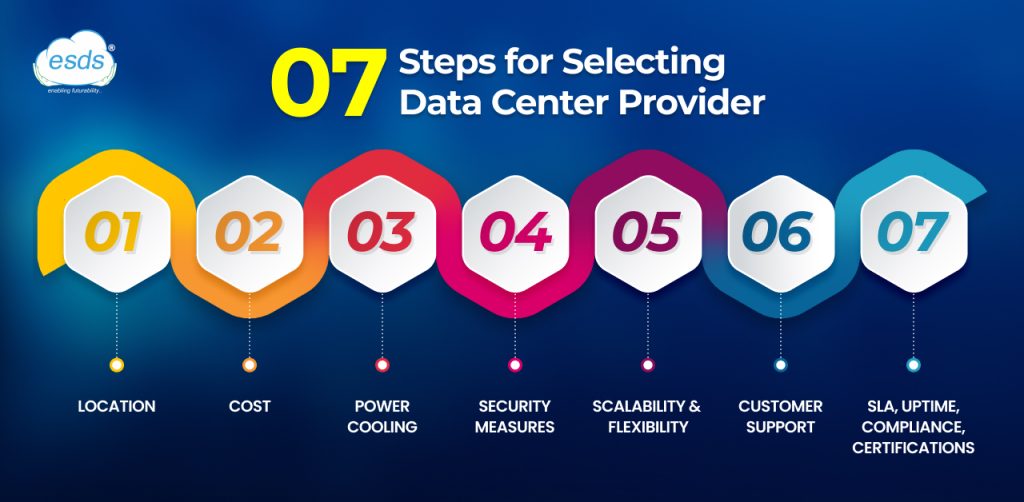
7 steps You Need to Consider While Choosing a Data Center Provider

Selecting the best data center provider is essential to guaranteeing the scalability, security, and dependability of your IT infrastructure. Here are some important factors to think about before choosing your choice.

  • Location

When selecting a data center provider, location is crucial for a number of reasons. First, think about how easy it is for your staff to get to the site, particularly for maintenance or equipment upgrades. Location-related delays or inefficiencies can be expensive. Additionally, assess the region’s susceptibility to earthquakes, tornadoes, floods, and hurricanes. Although data center providers typically take these hazards into consideration, it is advisable to confirm the facility’s readiness.

Lastly, we’ll go into greater detail about the network and customer ecosystems, but first we’ll make sure the data center has enough power and numerous fiber channels for connectivity.

  • Power Cooling

Because outages are expensive, it is essential to guarantee continuous electricity and efficient cooling systems. Implementing a multi-path configuration for redundancy is the ideal course of action, as it allows for seamless system replacement in the event of a failure.

For client equipment to operate at its best, data center server cooling is essential. This could entail cutting-edge methods like cold-aisle containment, free air cooling, and deep lake water cooling, among others.

  • Security Measures

Your business depends on your data. When hosting it somewhere else, be sure the supplier adheres to SOC 2, SSAE 18, and HIPAA laws and employs excellent security measures. The building should have strong physical security, which includes alarms, monitoring, access controls, and several levels of protection. To identify and notify you of any possible emergencies, sophisticated monitoring systems must be installed.

  • Scalability & Flexibility

Choose a service that can adapt to your changing needs in order to fulfill your short-term and long-term goals. While some data center providers give pre-made systems, others provide more adaptable and configurable choices.

Check if more resources, such as power, space, and connectivity, are available. Don’t let a provider who isn’t scalable restrict the possibility for expansion of your organization.

  • Cost

Find out how much power, cooling, and network connectivity will cost each time you host equipment at the colocation data center. Additionally, note any one-time infrastructure setup costs. Make sure that network connectivity and server power are covered by these fees.

Furthermore, for a cost, certain data center providers in India may provide additional services like equipment installation or remote hand help. Take into account the data center’s dependability and service quality while assessing expenses.

  • SLA, uptime, compliance and certifications

Assessing a potential data center partner’s demonstrated track record and committed service standards is essential. Although 99.99% uptime SLAs are provided by many data centers, others may go above and beyond. 

Verifying a data center’s providers dependability, security, and regulatory compliance requires independent audits and certifications, particularly for the government, financial services, and healthcare industries.

  • Customer Support

More than just more room and faster speeds should be provided by data centers. A first-rate facility has committed, knowledgeable support staff on hand around-the-clock to answer inquiries and fix problems.

Conclusion:

Choosing the right data center provider is a crucial decision that can significantly affect the success and expansion of your company, regardless of whether you’re just starting your search or switching from another provider. By considering elements like location, data center security, scalability, flexibility, dependability, network connectivity, on-site assistance, customer service, and SLAs, you can make decisions that will satisfy the demands of your organization and its long-term objectives.

ESDS is one of the leading data center management organizations in India that provides services to assist and safeguard your IT infrastructure while you search for the finest data center provider. You can rely on us to support the digital success of your company because we prioritize security, dependability, and scalability.

Ready to find the perfect data center provider for your business? Contact ESDS Software Solution today to explore our secure, scalable, and reliable data center solutions

How to Prevent Data Center Fires: Lessons from the Biggest Incidents?

Datacenter fires, though relatively rare, can have catastrophic consequences. From endangering lives to causing millions in damages and prolonged downtime, these incidents underscore the importance of robust safety measures and disaster recovery plans. However, due to concerns about non-disclosure agreements (NDAs) and public relations (PR), many organizations are reluctant to share detailed reports about such incidents. This lack of transparency can hinder the industry’s ability to learn from past mistakes and implement preventive measures.

According to the Uptime Institute, high-profile data center outages caused by fires or fire suppression systems occurred between 2020 and early 2023. While fires account for a small percentage of data center incidents, their potential impact on business continuity and customer trust cannot be ignored.

Notable Data Center Fires: Key Takeaways

  1. Google Data Center Fire, Iowa (2022)
    An arc flash in a substation near Google’s Council Bluffs data center caused an explosion, injuring three workers. Although unrelated to the simultaneous outage of Google’s maps and search services, the incident highlighted the risks associated with electrical infrastructure.
  2. Evocative Data Center Fire, New Jersey (2023)
    A fire in the UPS area of Evocative’s Secaucus facility required a full power shutdown. Fortunately, no injuries were reported, but the incident disrupted services for many New York metro area companies.
  3. OVHcloud Data Center Fire, France (2021)
    A catastrophic fire destroyed one of OVHcloud’s Strasbourg data centers and damaged another. The incident underscored the importance of compartmentalization and redundant infrastructure to limit fire spread and ensure service continuity.
  4. SK Inc. C&C Fire, South Korea (2021)
    A fire at SK C&C’s data center disrupted Kakao Corporation’s services for hours, exposing gaps in its disaster recovery plan. The incident led to establishing a recurrence prevention committee to address vulnerabilities.
  5. Reliance Jio, India (2024)

Reliance, a large telecom company, Reliance Jio, had a significant network outage on Tuesday (September 17).

According to the outage monitoring website Downdetector, over 10,000 customers reported not receiving signals, experiencing issues with JioFiber, and accessing mobile internet.

Confirming the situation, a Jio representative told Reuters, “This morning, certain Jio users in Mumbai had trouble accessing smooth services due to minor technical difficulties. The issue has been rectified, and Jio’s seamless services are entirely restored. We apologize for the disruption to our subscribers.

Building Resilience: Preventing Data Center Fires

Datacenter fires can result from various causes, including arc flashes, faulty infrastructure, hardware failures, and human error. While some incidents are unavoidable, many can be prevented through proactive measures.

  • Infrastructure Safety: Regular inspections, maintenance, and upgrades of electrical and mechanical systems are critical. Compartmentalization can help contain fires and prevent them from spreading.
  • Compliance and Regulation: Stronger compliance standards, such as Colorado’s Federal Data Center Enhancement Act and Maryland’s Critical Infrastructure Streamlining Act, ensure infrastructure resilience.
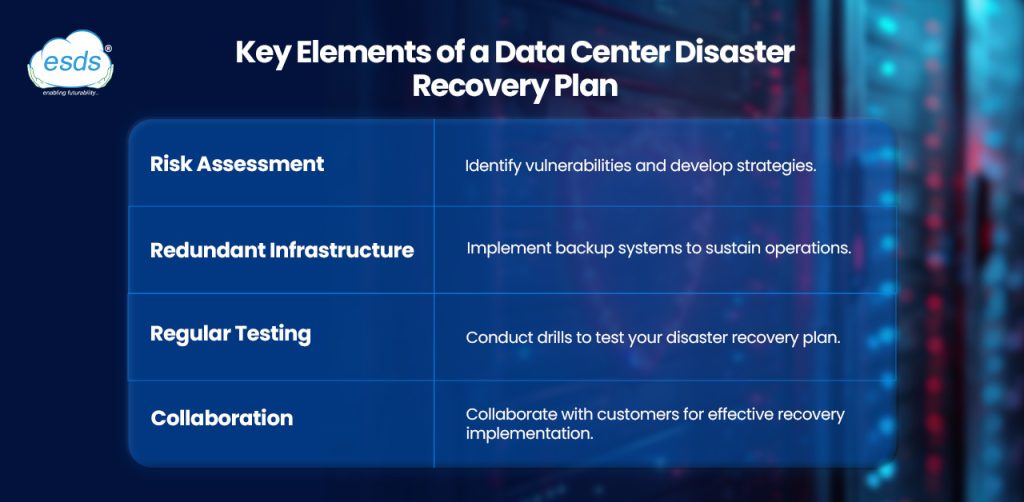
  • Disaster Recovery Plans: A well-defined disaster recovery plan, including risk assessment, redundant infrastructure, and backup power generators, can minimize downtime and protect data.

The Role of ESDS in Ensuring Business Continuity

At ESDS, we understand the importance of safeguarding your data and ensuring uninterrupted operations. Our state-of-the-art data centers are designed with resilience in mind, incorporating advanced fire suppression systems, redundant power supplies, and robust disaster recovery protocols. We also offer comprehensive disaster recovery as a service (DRaaS) to help businesses quickly restore operations during a catastrophic event.

Staying Ahead of the Curve

Disaster recovery plans are not static documents but living frameworks that must evolve with your business and technology. Krista Shepard of Cologix aptly said, “It’s important to periodically update and refine disaster recovery plans as your business and technology evolve and to adapt to changing environmental and weather conditions.”

At ESDS, we are committed to helping businesses stay ahead of the curve by providing cutting-edge solutions and expert guidance. Whether you want to enhance your data center’s resilience or develop a comprehensive disaster recovery plan, we’ve got you covered.

Conclusion

Datacenter fires may be rare, but their potential impact is too significant to ignore. By learning from past incidents, investing in infrastructure safety, and implementing robust disaster recovery plans, businesses can protect their operations, safeguard their customers’ trust, and ensure long-term success.


ESDS delivers secure, scalable, and resilient data center solutions tailored to your business needs. From disaster recovery as a service (DRaaS) to advanced fire suppression systems, our cutting-edge technologies ensure your data is always protected. Partner with ESDS to build a future-proof infrastructure that guarantees business continuity, no matter what challenges arise.

Contact us today to learn how we can help you stay ahead in an ever-evolving digital landscape.

Data Center Cooling in 2025: Emerging Trends and Strategic Approaches for Efficiency

As we enter 2025, data center services are in a position to adopt various new cooling technologies and techniques. These range from quite mature and proven solutions to much more experimental ones. Yet, they are bound to influence data center cooling trends in 2025 as enterprises look for even more cost-effective and sustainable methods of cooling facilities.

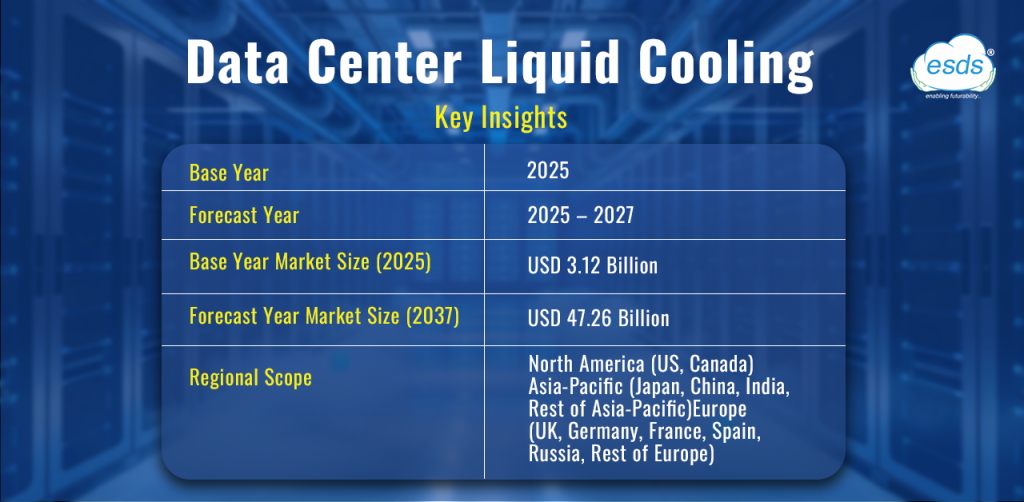
Below are the key statistics for the Data center shown below:

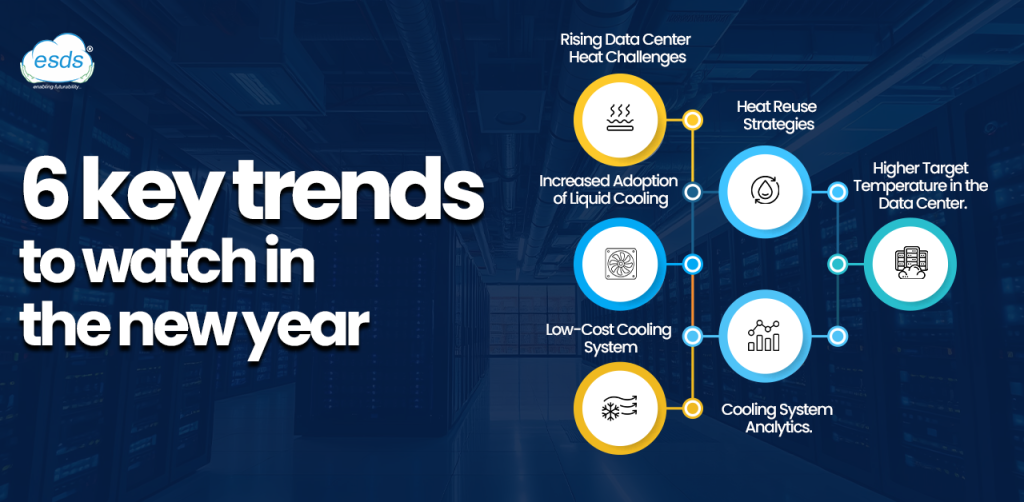
Here are the six key data center cooling trends in the new year:

  • Rising Data Center Heat Challenges

The most critical data center services cooling trend impacting the sector in 2025 is increased demand for cooling systems. This is due primarily to the ongoing deployment of AI workloads, which tend to generate more heat than traditional applications.

In 2025 and beyond, finding ways to improve data center cooling won’t simply be about saving money or reducing carbon emissions. Ensuring facilities can accommodate AI without overheating will also become critical.

  • Increased Adoption of Liquid Cooling

One way to dissipate heat more effectively is to replace traditional air coolers with liquid cooling systems. These may include immersion cooling, which covers equipment in non-conductive liquid, an extremely efficient but costly cooling method, and direct-to-chip cooling, which transfers heat directly from chips.

Liquid cooling systems are generally much more expensive than traditional cooling solutions, and they can be challenging to retrofit into existing facilities. However, according to IDC, 22% of data centers already have liquid cooling systems. Expect that figure to grow in the new year as data center operators respond to contend with the added heat load of AI and leverage innovations designed to make liquid cooling more efficient and reliable, such as a novel propylene glycol-based direct-to-chip cooling fluid recently unveiled by Castor.

  • Low-Cost Cooling System Improvements

Another way to improve the effectiveness of data center cooling is to optimize the chilled-air systems many facilities already have. Simple, inexpensive improvements like optimizing the positioning of fans or sealing off space that doesn’t need to be cooled to avoid blowing air into it can deliver essential boosts in cooling system capabilities.

Measures like these won’t typically result in triple-digit performance improvements. Still, they may boost cooling capacity by 10-20%—which could be enough to allow facilities to support heat-intensive AI workloads without requiring brand-new cooling systems. We expect these improvements to become another data center cooling trend in the new year.

  • Creative Heat Reuse Strategies

In addition to the need to dissipate more heat, part of the pressure data center operators face on the cooling front currently centers on sustainability. To reduce overall carbon emissions, facilities must reduce the energy they waste through heat dissipation.

Newer, more efficient cooling technologies (such as liquid cooling, which we mentioned above) are one way to do this. But another strategy is to repurpose the heat that cooling systems pump out of data centers. Communities can reuse heat in homes, for example—or, more creatively, heat swimming pools or grow plants.

Heat reuse practices like these are already underway. As businesses focus on data center sustainability, expect to see more of them in 2025.

  • Cooling System Analytics

To optimize your data center cooling system, you must first identify its weaknesses. This is where cooling system sensors and data analytics come in. By collecting and analyzing data such as the temperature within various parts of a data center, operators can determine which equipment runs hotter than it should. They can also find instances where cooling systems remove more heat than necessary, which could signify wasted cooling capacity and energy.

Sensor-based temperature monitoring and analytics in data centers is not a new practice. However, advancements in AI technology have made it easier than ever to process this data and identify optimization opportunities based on it. Therefore, we’ll likely see more and more investment in this cooling system analytics in 2025.

  • Higher Target Temperatures in Data Centers

Traditionally, data center operators have aimed to keep server room temperatures below. However, some data center companies have begun experimenting with somewhat higher temperatures in their server rooms, and they’re reporting success. By increasing target temperatures to the higher 70s, they can reduce the load on cooling systems without experiencing overheating events for IT equipment.

While it’s essential to ensure that servers can tolerate higher temperatures before adopting this practice, this is another low-cost way to improve cooling capacity and reduce energy use, which is why I suspect we’ll see more data center operators adopting this tactic in the new year.

Conclusion

ESDS leads the industry by providing innovative, cutting-edge data center cooling solutions developed with current market requirements. Using liquid cooling technology, ESDS helps data center operators shift from conventional air cooling to a far more efficient and sustainable option.

Data Center Services for Growth Enhancing Scalability and Security

Data consumption has significantly increased due to the large increase in digital adoption across industries, which has strengthened India’s economic growth. The current economic boom shows how businesses are becoming more and more reliant on virtual solutions, which makes robust data centers necessary. Future growth in this need for data will drive advancements in the existing state of data infrastructure, which must address security, scalability, and performance issues brought on by today’s new workloads.

Data Center Market Growth Revenue in 2024

According to Statista, the data center business is predicted to earn $8.65 billion in sales by 2024.
The market is led by network infrastructure, which is estimated to reach $5.93 billion by 2024. Revenue is expected to rise at a compound annual growth rate (CAGR) of 6.50% by 2029, with a market volume of $11.85 billion. Globally, the United States will generate the majority of revenue (US$123.20 billion by 2024).

Overview of Data Center in India

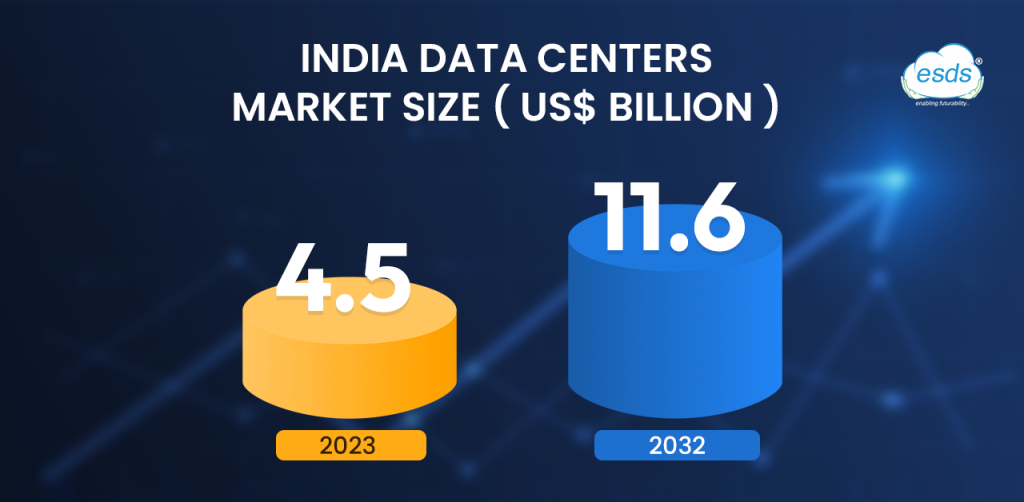
In both developed and emerging nations, the data center sector has grown significantly. This is because businesses are becoming more ready to spend money on new infrastructure for data deployment and storage. In the age of digitalization, the data center industry in India is expanding rapidly. The country is well-positioned to become a global hub for data centers, especially those focused on cloud computing, and has a bright future ahead.

The top seven cities in India now have data centers with a combined capacity of 977 MW, according to a survey by Cushman & Wakefield. It is anticipated that India’s data center capacity will increase significantly in the future. By 2028, the capacity expansions now under development are predicted to reach 1.03 GW.

ESDS Major Player in the Indian Data Center Market

ESDS Colocation Services provides enterprises with cutting-edge data center capabilities, ensuring 99.995% uptime with 2N+1 redundant UPS systems and controlled diesel generators. Clients benefit from two Power Distribution Units for accurate monitoring and remote management via KVM-IP, as well as scalable power solutions ranging from 4KW to 40KW rack. Advanced safety features include precise air conditioning, VESDA smoke detection, and fire suppression. Additional advantages include no-cost installations, proactive monitoring, and performance assessments, which ensure ongoing peak performance and business continuity.

Cloud Integration: Enhancing Flexibility and Scalability

Cloud computing is revolutionizing the IT infrastructure of most businesses. It brings high-quality integration services to the data centers, allowing all organizations to connect their in-house systems with cloud environments simply. Integration services offered by these enable companies to be flexible in how they handle workloads and scale resources on demand without heavily investing in physical data center servers.

Hybrid clouds are currently becoming more prominent in the enterprise world simply because they offer the best of both worlds – namely, private and public clouds. This model provides an opportunity for enterprises to handle sensitive workloads on the private clouds while enjoying the economies and scalability benefits of public cloud resources. This integrated environment helps IT professionals reallocate workloads dynamically, optimize resource utilization, and, hence, enhance overall efficiency.

Data Center Security: Ensuring Protection and Compliance

As corporations increasingly store sensitive data, data center security is taking a huge chunk of focus. Data breaches, cyberattacks, and regulatory compliance are cited by C-level executives as the most significant reasons why data security remains pivotal in the management of a data center.

A better data center provider has a strict type of physical and digital security implementation to protect data and IT infrastructure. Physical would include general surveillance 24/7, biometric access controls, and also redundancy in power and cooling systems to ensure no downtime. The digital involves advanced firewall systems, intrusion detection, encryption, and continuous monitoring. Only these will quickly identify threats so that there is faster neutralization.

Any reliable data center provider must adhere to industry standards like ISO 27001, SOC 2, or GDPR. These requirements ensure that the operations of a data center are stringent regarding security and that their customer’s data is delivered with the utmost care. Besides, secured data transmission over the Internet and proper policies of network security always help to reduce the risks associated with cyberattacks or data breaches.

Colocation Services: Optimizing IT Infrastructure

One of the best solutions for organizations that want to reduce their capital expenditures without controlling their IT infrastructure is colocation services. Colocation allows companies to maintain their servers and all their associated hardware within a third-party data center, thereby enabling them to access world-class facilities devoid of the sunk costs or maintenance costs of a company’s data centers.

Colocation allows an organization to use the infrastructure of the data center, be it in the form of robust power supplies or cooling systems and high-speed network connections, while retaining ownership of its hardware. This approach also allows for the flexibility of growing up in response to changes within the needs of the business without requiring any other investment in physical space or resources.

Disaster Recovery Solutions: Safeguarding Business Continuity

Business continuity is aimed at recovery from unexpected disruptions, and disaster recovery services from data centers help protect organizations against data loss to help the business regain normalcy after a disaster.

Disaster recovery as a service encompasses strong solutions like automated backup, real-time replication, and geographic redundancy. Data centers adopt both recovery point objectives—which measure how much data could be lost if the failure happens—and recovery time objectives—which outline how quickly systems should recover to their operational power. These metrics determine that businesses will operate with minimum downtime, so the disasters will have little revenue impact and customer satisfaction.

Conclusion

Today, no business can afford to overlook robust data center services, be it cloud integration, data center security, colocation, or disaster recovery. It is thus advisable that businesses select a reliable data center provider and maintain agility, security, and resilience. A scalable, secure, and efficient IT infrastructure will be pivotal to growth in the not-too-distant future.

Find out how ESDS data centers in India are changing the game for business resilience and scalability with cloud integration, security, colocation, and disaster recovery solutions. India Ka Apna Cloud-powering, the cutting-edge technology offered by ESDS, gets to the very specific needs of Indian businesses: this uniquely catered requirement ensures compliance, data sovereignty, and higher security.