
Determining How CDN Can Be Beneficial for Enterprises

CDN solutions 1

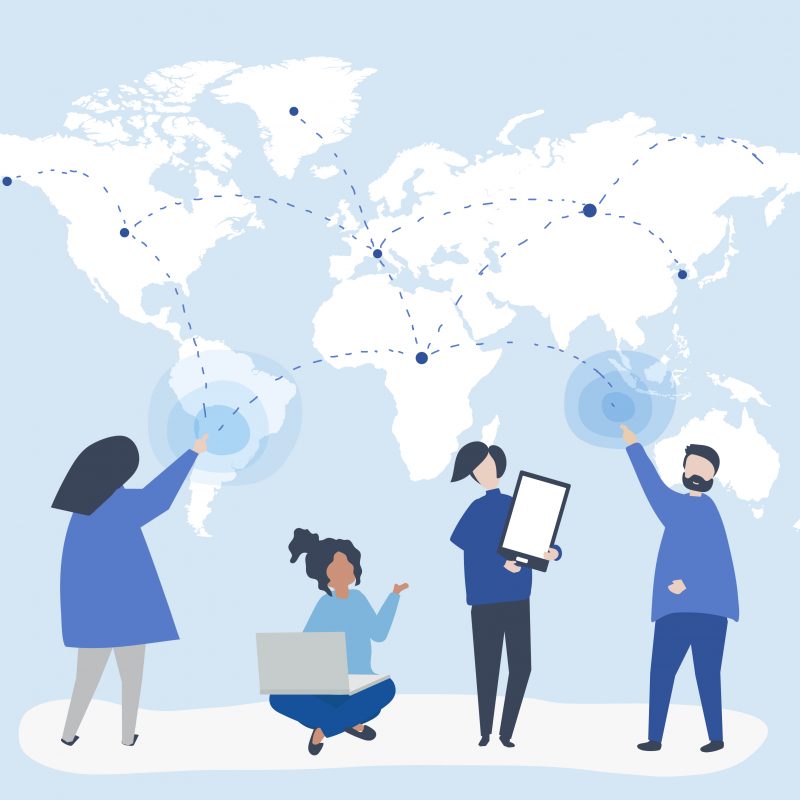
Businesses often use a Content Delivery Network or CDN to reduce the delay & latency on a network. CDN uses multiple & geographically scattered Data Centers, also known as Points of Presence (PoPs). When it comes to image hosting, static images can be deployed across these servers that ensure quick delivery, thus reducing the download time.

What is a CDN?

A Content Delivery Network or CDN defines a system of multiple servers containing replicated data present & stored across different PoPs. A rightly implemented CDN Solution helps in improving the data access as it increases bandwidth, thereby minimizing the latency. A CDN Solution comprises various elements like video downloads, image downloads, applications, and other objects. A trusted CDN provider comprises multiple & localized Points of Presence (PoPs) or Data Centers connected over the Internet.

How CDN Works

CDN Solutions contain several replicas of static resources present in the website and then cache these across various Data Centers that are geographically scattered. Whenever there is a website visitor, the visitor is presented with core and dynamic content present. The user updates the content frequently, and the static content present in the website uses their source URLs to be rewritten, delivered from different geographically scattered Data Centers.

Types of CDN

There are two basic models in any CDN Solution: peer-to-peer (P2P) network and peering/private models.

  • Peer-to-peer Network Model

This CDN Model is highly decentralized and made up of systems of individual users having access to certain files that can be extracted from the servers. In a P2P CDN Model, it becomes feasible for the CDN users to host their website along with the associated files. The biggest drawback of this CDN Model is security, and the complete processing of collecting files at a single destination can sometimes become a challenging task.

  • Peering/Private CDN Model

In this CDN model, enterprises ensure servers are geographically scattered. Each of the localized PoPs contains replicas of user files, and when a website visitor visits it, they can download the files from the Data Center that is present geographically closest to them. In a peering/private CDN model, the loading time gets enhanced multi-folds and secures the website from any crashes or failures.

How CDN Benefits?

With a CDN Solution in place, the following benefits are gained by users-

  • Speed

A CDN Solution assures website visitors by serving files directly from the Data Center present geographically closest to them. Such localized Data Centers reduce the distance traveled by the file and the number of relays & steps. This enhanced speed offered by CDN Solutions can be of great help, especially in large-sized files, as they tend to take a longer time than the small ones.  Smaller images have very low loading times and are fetched quickly from the nearest Data Centers.

  • Provides Alternates to Hosting

Users often use webservers for multiple reasons. The primary concern rests with the fact the website visitors are geographically dispersed, resulting in lower loading & accessing speeds. With a CDN solution deployed, it becomes easier to determine the main server and the hosting provider that meets the increasing needs of website visitors.

  • Reliability

CDN Solutions are well known for delivering redundancy. There is a constant risk of webservers facing physical damage or lags in the installed software. In case a node is not available, and a CDN solution is deployed. The network reconfigures itself for delivering the user requested data from the best node present in the network. In the case of websites, it is proven that hosting images enhance viewership by multi-folds; however, a single PoP can hamper the website’s performance during traffic surges. With a Content Delivery Network in place, the network distributes the load by redirecting the image requests to different CDN servers. As the load is distributed within the network, images and other media files on the website get loaded at faster rates.

  • Security

CDN solutions are often used by business heads handling highly confidential & sensitive data. CDN helps such CIOs & CTOs from these industries by providing them a high-level cyber defense against attempts made for hacking. Such security mechanisms are implemented on a broad level, benefitting every end-user.

Concluding Remarks

Content Delivery Network or CDN plays an important role in reducing the time taken by web hosting servers to process and deliver the user requested content. It also minimizes latency by fetching data from the nearest Data Centers present in the network, resulting in lower delay. Longer delays in data loading result in lower user experience, but with CDN, this problem is easily addressed, and user experience gets enhanced. Besides faster loading & data replications, CDN ensures that during scenarios like traffic surges, network downtimes, the website remains secure & safeguarded across the network. For websites, it plays an important role in improving their ranking.
Colocation Benefits – A simplified solution

Colocation hosting refers to the transfer of your IT infrastructure to a third-party data center. The data centers are extremely dependable, secure, and have a fully redundant infrastructure. Co-locating your web servers to a data center is always a good idea because it offers many advantages and provides a secure physical environment for your server.

Colocation web hosting provides all of the extra capabilities while also protecting data from natural calamities. Customers who have their own server can host it at a purpose-built Data Center, which is referred to as colocation (or Colocation Center). Customers pay for rack space in which to store their server while maintaining control over it.

There are numerous benefits which can be classified as follows:

Cost-effective

The colocation service is considered one of the cost-effective solutions for your servers to maintain. Basically, you don’t need to build and maintain the in-house requirements that your server demands can cost you valuable capital in facilities, Internet connectivity, and maintenance personnel. The colocation hosting providers have such kind of full facility available with their infrastructure.

Reliable Uptime

For server owners, uptime is always a big worry. With a colocation facility, one can rest assured that his server will be up and running at all times. Everything in a colocation center is redundant, so if something goes wrong, the colocation customers’ server and network equipment will be unaffected because redundant systems are in place to automatically replace the ones that went wrong.

Air conditioning systems, UPS (uninterruptible power systems), power generators, utility electricity, network routers, redundant Internet backbones with plenty of extra capacity, and redundant onsite network engineering employees are all examples of this.

More Security

Security is of prime importance when it comes to the servers or leasing any services for your IT equipment. Data centers are generally considered to be secured and well-established infrastructure. Data centers should be monitored 24-7. Your systems should be housed in a state-of-the-art data center, with redundant air cooling and filtering systems, designed to operate even in the event of a power failure. Data centers should be located and built to withstand natural disasters and other emergencies.

Network Speed & Reliability

Every server owner is concerned about getting good performance and dependability. The gear is designed to withstand both a climate-controlled environment and power conditioning. You can use server hosting to have access to enterprise-level backup and monitoring capabilities.

Many colocation service providers use BGP and have multiple Internet backbones and redundant Internet networks entering their facility. When a firm sets up a network at an office, they typically only receive the Internet bandwidth capacity that they require, such as a single T3, which is 45 megabits, or an OC3, which is 155 megabits, without redundancy.

Outage Protection

When deciding whether or not to move computers to a data center, power redundancy and backup are critical considerations. Power generators and backup power supplies are frequently used in colocation data centers to provide redundancy. This will allow networks to stay up even if there is a long-term power outage. Colocation providers frequently provide flood and fire protection for servers.

Data Center Checklist – Key Pointers to Consider

Data Center Checklist

In today’s Data-Driven world, Data Centers have an important & indispensable role to play. They are the home to numerous servers that drive the Internet and networking. Recently, the world has witnessed a massive transition in the technologies being deployed in these Data Centers. Server Visualization and powerhouses offering high-speed connectivity are seen as technological upgrades.

Data Center Checklist

However, any end-user of Data Center needs to consider some critical components, which are listed below-

  • Security

Today, Data Centers store vast volumes of critical data that are processed and distributed across used for driving valuable insights. This data varies in terms of vitality and confidentiality. Hence, security is one of the significant factors that must not be compromised at any cost. The capability of servers to encrypt the data, uplink security, etc., are some worthy aspects to consider for enhancing online security. Additionally, there also needs to be a proper hardware security recovery plan, which can be implemented in case of an unforeseen disaster or mishaps. Hence, servers and other hardware must be adequately secured against thefts and natural or human-induced disasters. Thus, the user needs to choose a Data Center provider that ensures the highest levels of security on multiple layers.

  • High-Speed Connectivity

High-Speed Connectivity is an important aspect when selecting a Data Center. Businesses usually like ‘High Speed,’ ‘High-Speed Servers,’ etc., but these are misleading. A Data Center user needs to understand that High Speed refers to the backbone network that connects Data Centers users and providers. Besides all this, the Data Center providers should also offer customized Solutions like routers, switches, load balancers, and their blueprints. A professional Data Center provider will go beyond providing traditional services and ensuring the guaranteed uptime.

  • Reliability

Reliability is an important consideration when evaluating a Data Center provider. It becomes essentially important to have robust backup plans and RAID offerings. The power systems must offer high backup, and the power equipment is well-versed in tackling emergency situations. As an end-user, he must carry out extensive research and review checks about the Data Center provider and the service quality level that they offer. Discussing the requirements with a Data Center provider like ESDS can make the decision process faster and efficient. Data Center users must have a clear idea about their provider’s Disaster Recovery mechanism and the guarantee levels for securing the critical data.

  • Redundancy

Today, most of the leading Data Center providers have their Data Centers located at multiple locations and different seismic zones. These redundant Data Centers help in the faster recovery of data in any unforeseen disaster event. The data present at these redundant Data Centers are secured by multiple level cyber and physical security. A reliable Data Center Hosting provider will have its different Data Centers in different seismic zones to avoid losses due to natural disasters.

Wrapping Up

The points mentioned in the above section are some critical aspects when looking for a Data Center provider. Users must carry out in-depth research and carefully evaluate Data Center providers on these parameters. Providers offering their own Data Center are keen to offer their infrastructure with the utmost security and end-to-end management. Some Data Center providers also offer a wide array of web hosting services if a user wishes to use them.

HYPERSCALE DATA CENTERS: INDIA’S DATA CENTER EXPANSION

There will be an expansion of data centers in India as digital users are growing unprecedentedly.

Indian consumers are among the significant users of social media services. Facebook has a practically equivalent number of users in India if compared to the US. Data localization will require storing all user-related information that incorporates the need for Facebook and other social media platforms to store its data and soaring data center demand in India.

The requirement for data center infrastructures in India is developing dramatically, as the scale of cloud adoption as well as data utilization and generation of half a billion digital users in India, is growing unprecedented.

Increasingly more Indian companies are hoping to evolve into digital-first businesses, with a characteristic movement towards increased cloud-driven advancements in all cases.

The spread of COVID-19 has halted different data center development projects in India. Experts at Arizton expect that the pandemic will respectably affect forthcoming projects expected to be opened in Q4 2020 and Q1 2021. In any case, the spread of Covid-19 has fundamentally led to the growth of data traffic from March 2020.

To give all-time availability services, administrators are taking careful steps for their on-location workers. Hence, the COVID-19 effect on data center operations is expected to be low in India.

According to a new report (covered by Fortune India), jointly penned by real estate services company Anarock, and Mace, a London-based consultancy and construction company, stated that India will see an expansion of at least 28 enormous hyper-scale data centers in the coming three years.

The Anarock-Mace report contends that these hyperscale data centers will length over 16+ million sq. ft. with at least 1,400+ MW of IT power limit. This is almost “0.6 million sq. ft. What’s more, 50 MW per facility on an average per hyperscale data centre. It further mentions that India will see a significant development in the data center industry, driven by expanded data consumption and policy incentives.

According to another study, local vendors will rule the colocation market; nonetheless, the presence of worldwide sellers is expanding by means of inorganic techniques. Further, as the investment in technologies such as AI, big data, IoT increases, there will be a surge in demand for application-specific infrastructure solutions in India.

Source

Making Data Center Smart: How Artificial Intelligence Helps?

artificial intelligence

As data centers become an enabler to a nation’s economy, employing artificial intelligence can yield higher benefits

Artificial Intelligence (AI) plays a pivotal role in capturing, processing, and analyzing data at a much faster rate than ever, today! It is also becoming more efficient and useful to incorporate data elements and managing data centers.

With data becoming a pre-requisite to sustain almost every business operation for insight and business results, data centers are on the crux of this digital transformation. These physical facilities that house the computers and equipment power the information needs of the modern economy. Data centers provide seamless data backup and recovery facilities while supporting cloud storage applications and transactions. Apart from boosting the economy, the data center ecosystem attracts many international tech companies for the nation. Moreover, the presence of data centers ensures an excellent investment climate and employment opportunities for the local community.

Despite their key role in bringing a digital revolution, they are not without problems. According to Gartner analyst Dave Cappuccio, 80% of enterprises will shut down their traditional data centers by 2025. The figures are fitting considering the host of problems faced by traditional data centers like lack of readiness to upgrade, infrastructure challenges, environmental issues, and more. And the remedy for this is leveraging artificial intelligence to enhance the data center functions and infrastructure.

As per a Forbes Insights report, in early 2020, artificial intelligence is poised to have a tremendous impact on data center management, productivity, and infrastructure. Meanwhile, its technologies continue to offer data centers potential solutions to improve operations over the long term. In return data centers enabled by accelerated computing capabilities of AI, would be able to process AI workloads more efficiently.

Data centers consume a lot of energy, so training an artificial intelligence network to improve power usage effectiveness (PUE) is a key goal. PUE is an essential metric to measure data center efficiency. In 2014 by deploying Deepmind AI in one of its facilities, Google was able to consistently achieve a 40% reduction in the amount of energy used for cooling, which equated to a 15% reduction in overall PUE overhead after accounting for electrical losses and other non-cooling inefficiencies. It also produced the lowest PUE the site had ever seen. Deepmind analyzes over 100 different variables within the data center to improve efficiency and reduce power consumption.

Data centers are also susceptible to various cyber threats. Cybercriminals are always finding new ways to obtain data from data centers or launch their next data breach attack. By learning normal network behavior and detecting cyber threats based on deviation from that behavior, artificial intelligence proves to be resourceful again!  Artificial algorithms can complement current Security Incidents and Event Management (SIEM) systems, by analyzing incidents and inputs from multiple systems, and devising an appropriate incident response system.

In a data center, IT devices are often deployed or removed from shelves that brings a lot of fragmented resources, like U space, which cannot be monitored or managed, and are easy to get wasted. By using intelligent hardware and IoT sensors, artificial intelligence allows effective data center infrastructure management that keeps a close eye on the data center and reduces repetitive work through automation. Here, data center managers can automate activities like temperature management, equipment status monitoring, floor security, fire hazards mitigation, ventilation, and cooling systems management. Coupled with predictive analytics, automation also helps in predictive maintenance at data centers.

Further, this AI-based predictive analysis can help data centers distribute workloads across the many servers in the firm. As a result, it will be easy to predict and manage data center loads more efficiently. It will also help in optimizing server storage systems, finding possible fault points in the system, improve processing times, and reducing risk factors much faster.

Recently, MIT researchers had developed an AI system that automatically learns how to schedule data-processing operations across thousands of servers. This system was observed to be about 20 to 30% faster, and twice as fast during high-traffic times in completing key data center tasks. The researchers assert that this artificial intelligence system could enable data centers to handle the same workload at higher speeds, using fewer resources.

Additionally, through deep learning (DL) applications, AI can predict failures and outages ahead of time. E.g.  HPE artificial intelligence predictive engine helps in identifying and resolving bottlenecks in the data center.  A survey of 200 companies highlighted that downtime results in losses surpassing US$26.5 billion, with the cost per minute of a network outage reaching approximately US$7,900. By monitoring server performance, network congestions, and disk utilization, AI can detect and predict data outages. Besides, it can implement mitigation strategies to help the data center recover from the data outage – thus adding to customer satisfaction and minimal losses during such outages.

Source